• Skip to main content

Aline Soules

Poet and Fiction Writer

  • Home
  • About
  • Blog
  • Books
    • Evening Sun
    • Meditation on Woman
    • The Size of the World
  • Contact

truth in fiction

May 25 2022

My Mother in the UK, 1939-1940

On the eve of World War II, my mother was engaged.  His name was Richard (I’m not sure of his last name, but it might have been Hudson) and he ended up in the Royal Air Force, not as a pilot, but as an aircrew member in the RAF Bomber Command.  Based on my mother’s age in 1939 (she was born in 1908, so 31), she and Richard must have decided to “wait” to marry until the war ended.  Statistics for survival were slim.  Forty-six percent (46%) of the 125,000 aircrew were killed.  That’s 57,205 men.  In addition, 8,403 were wounded in action and 9,838 ended up as POWs.  That’s a total of 60% of those airmen.  In June 2012, the Queen unveiled a memorial to them.  Richard was one of the dead.  

My mother was a trained “almoner,” the term in the UK for a medical social worker.  She was stationed in Stirling, Scotland, but periodically travelled to London for her work.  As a result, she experienced some of the London Blitz, which ran from September 7, 1940 – May 11, 1941.  One of her experiences early in the Blitz was meeting the woman who became the main character in my book.  This woman, in the French Resistance, had been “extracted” from France because the Germans were getting too close to her.  “Extracted” was the term used to describe the process of taking someone out of danger, often via plane.  Ironically, there she was, in London, during the Blitz, for “safe-keeping.”  

She had an older brother. The siblings had been born in the same house in the region of Alsace in Eastern France.  Her brother was born in 1917.  She was born in 1920.  The 1919 Treaty of Versailles that officially ended World War I included a section that ceded Alsace and its northern neighbor, Lorraine, from Germany to France.  Between 1871 and 1919, the regions of Alsace and Lorraine had gone back and forth between France and Germany five times.  As a result, no one worried about citizenship because there was constant shifting and there was no point in changing.

When the brother was born in 1917, he was German, as Alsace belonged to Germany at that time.  When the sister was born in 1920, she was French, as Alsace was now part of France (it has remained so since that time).  When World War II came along, the brother was drafted into the German army as a German citizen.  She ended up in the French Resistance.

I knew I could make a story out of this.  

Meanwhile, by 1940, both my parents had lost their partners and had to struggle on through the war with grief in their hearts.  

Written by Aline Soules · Categorized: Historical Fiction, History · Tagged: family history, idea for a novel, truth in fiction, World War II

Dec 02 2020

Why Historical Fiction? Part II

In Part I, I addressed the issue of “truth” in historical fiction, focusing on facts and bias.  I promised to address the “emotional truth” of historical fiction in Part II.  

Emotional truth is about feelings which may or may not have anything to do with actual facts.  An author attempts to convey how characters “felt” about their time and the facts, the research, provides the context for those feelings, whether those feelings relate to the character’s family, historical events, or the character’s philosophical beliefs.  

And that’s the key. How characters face the challenges of their own time and how they feel as they wrestle with ethical dilemmas and make decisions help us to understand issues of our own time.  The distance of history and the mask of fiction enable us to draw parallels to our own time and consider our problems through a new lens.  That’s the joy of both the “history” and the “fiction” aspects of this genre of writing.  

Growing up, I devoured historical fiction.  I read works by Jean Fritz, the American children’s writer of biography and history, and learned about the founding fathers of this country.  As a teenager, I read the historical novels of Jean Plaidy (real name, Eleanor Alice Hibbert) and remember particularly her novels about the Tudor period.  I loved the intrigue and the romance, no matter how badly it ended up.

Now, I read historical fiction all the time.  I still enjoy the adventure and romance, but I value what it teaches me about my own world.  I’ve read a lot of historical fiction about World War II as part of the research for my own novel, as well as history and biography and reports and diaries,  because I wanted to know how other authors present their “emotional truth” of the period.  I want to add my own perspective of that truth, based on what I read and what I learned from the stories my parents and their generation told me when I was young.  

We are at a point where the survivors of WWII are now dying.  Shortly, their time will be fully “history” and we will no longer be able to hear their stories directly.  We will have only written, oral, and media presentations of that time.  This is my chance to add a perspective from what I read and from what I learned from those who lived through that time and conveyed their stories to me.  I want to honor that gift in my work.  I anticipate completing my novel in 2021 and look forward to sharing it with the world, adding my own perspective to the collective view of that time in history.

Image: https://celadonbooks.com/what-is-historical-fiction/ 

Written by Aline Soules · Categorized: Historical Fiction · Tagged: emotional truth in fiction, truth in fiction, World War II

Nov 17 2020

Why Historical Fiction? Pt. 1

Copernical heliocentrismI’ve been working on a historical novel set in WWII, most intensively in the last two years.  Why another WWII story? Because I see parallels to our own time, I grew up in Britain in the aftermath of that war, and my premise is based on a “true” story from WWII that was told to me by my mother.

The key is my first reason: parallels to our own time.  George Santayana wrote “Those who cannot remember the past are condemned to repeat it.” The challenge, however, is not remembering the past, but figuring it out at all.  As we approach a time when those who lived through WWII are slipping away, and those of us who were brought up immediately after that war and were affected by it, I wanted to explore the war from the intimate perspective of family.

A historical novel is undoubtedly biased and wouldn’t claim to be “true” in a factual sense, although authors of historical novels strive to set their work within an accurate context.  A historical novel presents a view of events that attempts to bring the reader closer to the emotional “truth” of those who experienced that period in history.   Before I address the idea of “emotional truth” in a blog post in a couple of weeks, it’s important, first, to address the nature of history itself.

History is a slippery slope.  Records are lost, suppressed, formally locked up for a certain number of years, interpreted.  Where does that take us?  To bias.  Even primary documents can be biased.  Diaries, obviously, but even a simple factual form.  Someone chooses to check the wrong box for his/her/eir age.  Why?  Vanity?  Fear? Some practical reason? Someone falsifies a document in order to survive; another person is forced to write what a person in power wants to hear.  Who can blame them?  You survive in the moment.  That’s why I often put the word “true” in quotes.  

Our biased behaviors probably go back to the beginning of the human race.  A classic example is Galileo.  He believed the sun was the center of our universe and that got him into trouble.

Enter the Roman Inquisition. In 1615, they decided his belief was heretical because it contradicted the sense of Holy Scripture.  When Galileo defended that belief in print, this was interpreted as an attack on Pope Urban VIII. Galileo was tried by the Inquisition, found heretical, and forced to recant.  

Why was Galileo was put on trial?  Politics (court intrigue, problems of state) and emotions (anger, fear on the part of the Pope).  The nemeses of historical truth.  

As an addendum, Galileo didn’t originate his belief.  He learned it from the work of Copernicus (b. 1473).  It is believed that Copernicus came to his conclusion independently of Aristarchus of Samos (born around 310 BCE), who probably originated the idea.  So someone knew how the universe was structured centuries before the majority of people accepted it as truth. 

In one way, this pressures a historical novel writer to be as accurate as possible as regards facts.  In another way, the very instability of history gives the historical novel writer permission because “truth” is far from absolute.

Written:  November 17, 2020.  Pt. 2 coming Dec. 1.

Image: https://en.wikipedia.org/wiki/Copernican_heliocentrism


Written by Aline Soules · Categorized: Historical Fiction · Tagged: historical truth, truth in fiction, truth in history, World War II

Oct 24 2018

The Truth of Fiction

I have the privilege of teaching an adult creative writing class through Scholar OLLI (Osher Lifelong Learning Institute).  A good many of the participants are writing memoirs or fiction based on memoir and I often hear comments such as “That’s the way I remember it.”  While I honor their intent to be true to what they remember, I also know that, in the words of the amazing poet, Stephen Dunn:

…what we choose to say about our past becomes our past. That other past, the one we’ve lived, exists in pieces that flicker and grow dim…Every time I save, I exclude.

(From “Memory,” in Riffs & Reciprocities: prose pairs.  New York: W. W. Norton, 1998)

What is the memory we struggle to share in memoir, in fiction, be it based on memoir or on history?  What part is true and what part imagined? What part is what we think is true?  The answer is complex.  Our early lives come to us both when we live them and, because our memories don’t appear to go back to infancy, when others (parents, older siblings) tell us what they remember.  As we grow older, we have our own memories, but how much do we mis-remember?  Perhaps, the “truest” part of memory is the emotion those memories evoke, however accurate or inaccurate.  Similarly, when we write fiction based on memory or on history, how “real” or “true” are the “facts”?

This leads to the issue of “fictive truth.” The distance of fiction can often lead to emotions and insights we don’t experience when we are given a story that purports to be “the truth” or “fact” or “memoir” or “history.”  As Stephen King wrote:

“Kids, fiction is the truth inside the lie, and the truth of this fiction is simple enough: the magic exists.”

Quote taken from Goodreads:  https://www.goodreads.com/quotes/256247-kids-fiction-is-the-truth-inside-the-lie-and-the

Image credit: http://www.doublequotes.net/quotes/stephen-king-quotes-fiction-is-the-truth-inside-the-lie

I have often thought that psychology is best served through fiction because we can live vicariously through the lens of that distance, knowing the story isn’t “true” or “real,” thereby enabling us to embrace it fully in ways we can’t embrace our own challenges directly.  Perhaps this is one reason why I continue to write, so that I can explore my own challenges through that distancing lens.  The joy of writing fiction is often in the way that fiction surprises me as a writer.  My hope is that if it surprises me, leads me to an unexpected emotional experience or an insight that gives me an “aha” moment, so, too, it will surprise my reader and give my reader a similar experience or insight.  

That’s the pleasure of writing and the satisfaction of the age-old three-way contract among the writer, the book, and the reader.

Written by Aline Soules · Categorized: Historical Fiction, Writing · Tagged: fiction, memoir, truth in fiction

Jul 26 2014

Fiction in Truth, Truth in Fiction

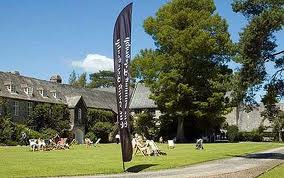
I’ve just come back from a “literature” tour in the UK.  Our group combined touring places of literary renown with meeting living authors.  One of the most interesting experiences was comparing biography and biographical fiction.  At the Ways with Words ways_with_words_dartington_hallfestival at Dartington Hall, Claire Tomalin spoke about writing biography, specifically her two works on Dickens and on Dickens and his mistress, Nelly Ternan.  At one point, she considered fictionalizing the latter work because there is less information about Ternan than about Dickens; however, in the end, she chose to stay with biography.  I then thought of Hilary Mantel’s Wolf Hall and its sequel Bring Up the Bodies, both of which present Thomas Cromwell through fiction while resorting to Mantel’s extensive research into the details of his life.  This raises the age-old question:  how do we get at “truth” or, at least, “truth” as each of us sees it?  What makes one writer write biography, choosing what to include and not include about a subject?  What makes another decide to fictionalize a subject?  Which path offers the closest “truth” of a subject, particularly one who can no longer refute what is said?  The answer is probably both routes, depending on the author and on the subject, but the subject is endlessly fascinating.

Written by Aline Soules · Categorized: Historical Fiction · Tagged: fiction, truth in fiction, ways with words festival

Copyright © 2026 ·